An AI sales agent does not replace a good salesperson. It handles the repetitive work around them: researching prospects, replying to new enquiries in seconds, following up on time and booking meetings. Humans stay best at discovery calls, negotiation, complex deals and relationships. Most businesses get the best results by combining the two.
"Can AI replace my sales team?" is one of the questions we hear most often from business owners in Gujarat. It is usually asked after a frustrating month: leads from the website went unanswered over a weekend, a salesperson forgot to follow up, or a good prospect went cold because nobody called back for three days.
The honest answer is that AI is very good at some parts of selling and poor at others. This article sets out which is which, so you can decide what to automate and what to keep personal.
What is an AI sales agent?
An AI sales agent is software that uses language models to carry out sales tasks with some independence. Depending on the product and setup, it can:
- research a prospect's website and business before the first message;
- write personalised emails and WhatsApp messages;
- reply to incoming enquiries and answer common questions;
- ask qualifying questions about budget, timeline and requirements;
- follow up on a schedule until the prospect replies or opts out;
- book meetings into a salesperson's calendar;
- log everything in the CRM.
It is different from a simple chatbot, which mostly waits for questions. A sales agent works through a process towards a goal, usually a qualified meeting.
Where does AI beat a human?
Speed. Research by Oldroyd, McElheran and Elkington published in Harvard Business Review, "The Short Life of Online Sales Leads", found that most companies do not respond to online leads nearly fast enough. An AI agent can reply within seconds, at 11 pm on a Sunday or during Diwali holidays.
Consistency. It asks every lead the same qualifying questions, never forgets a follow-up and never skips the CRM update.
Volume. It can research and draft messages for hundreds of prospects, a task that would take a person days.
Patience. It answers the same question about pricing or delivery time for the hundredth time in the same polite tone.
Where does a human beat AI?
Discovery. Understanding what a client really needs, often different from what they first ask for, takes judgement and good questions.
Negotiation. Price, scope and payment terms involve reading the other person and making trade-offs that only an authorised person should make.
Trust and relationships. For larger purchases, especially in Indian B2B markets, buyers want to know the person behind the company. Many deals still close over a call, a meeting or a referral.
Complex or unusual situations. Custom projects, complaints, and anything outside the script need a person.
AI sales agent vs human: side-by-side comparison
| Task | AI sales agent | Human salesperson |
|---|---|---|
| First reply to a new enquiry | Seconds, any time of day | Depends on working hours and workload |
| Prospect research | Fast and broad, needs checking | Slower, deeper on key accounts |
| Qualifying questions | Consistent every time | Flexible, can probe deeper |
| Follow-ups | Never forgets | Often slips when busy |
| Discovery and solution design | Limited | Strong |
| Negotiation and pricing | Should not decide | Strong, with authority |
| Relationship building | Weak | Strong |
| CRM updates | Automatic | Often incomplete |
| Cost pattern | Software and usage fees | Salary, incentives, training, turnover |
What does a hybrid sales process look like?
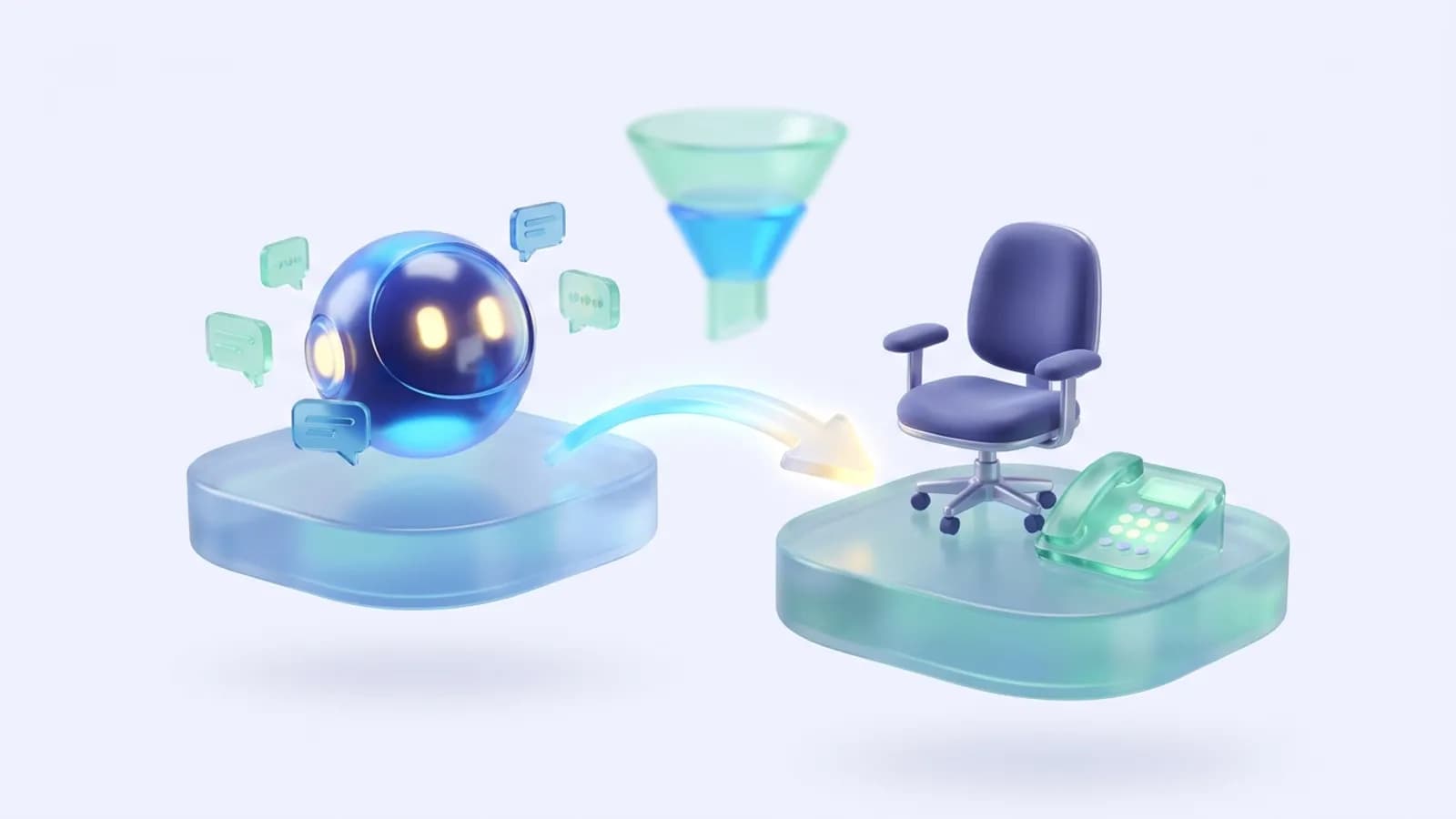
The model we recommend to most clients splits the funnel at the point where judgement starts to matter:
- Capture: enquiries from the website, WhatsApp, ads and portals flow into one CRM.
- Instant response (AI): the agent replies within seconds, answers common questions and shares brochures or price ranges.
- Qualification (AI): it asks the agreed questions and scores the lead.
- Handover (AI to human): qualified leads are booked into a salesperson's calendar with a summary of the conversation.
- Selling (human): the salesperson runs the discovery call, proposal and negotiation.
- Follow-up (AI with human approval): the agent drafts reminders and nurture messages; the salesperson approves or edits them.
- Re-engagement (AI): old leads that went quiet get a polite check-in after an agreed time.
Your sales team spends its time on conversations that can close, not on chasing unanswered enquiries.
What should you watch out for?
- Human approval for outbound messages. Especially at the start, have a person approve AI-written messages before they go out. This prevents embarrassing mistakes and protects your brand.
- Consent and channel rules. Sending marketing messages to people who never agreed to hear from you can break WhatsApp's business policies and India's data protection law. Our DPDP Act guide covers the basics.
- WhatsApp costs. Automated follow-ups on WhatsApp use paid templates outside the customer service window. See our WhatsApp Business API pricing guide.
- Accurate information. The agent must only quote prices, timelines and features you have approved. Give it a clear knowledge base and forbid guessing.
- Clear disclosure. Do not present the AI as a named human employee. Customers accept a helpful assistant; they do not like being misled.
How do you measure whether it works?
Track a few numbers before and after you introduce an AI agent, using your own CRM data:
- average time to first response;
- share of enquiries that get a reply at all;
- number of qualified meetings booked per month;
- conversion from meeting to sale;
- time your salespeople spend on admin versus selling.
Review the AI's conversations every week for the first two months. The unanswered or badly handled ones tell you exactly what to improve.
Which businesses benefit most?
- Businesses with many inbound enquiries and a small team, such as real estate developers, education institutes, clinics, travel and hospitality.
- B2B service companies that need steady outbound prospecting, such as IT services, manufacturing suppliers and agencies.
- Any business that gets enquiries outside office hours and loses them before Monday morning.
FAQs
Will an AI sales agent replace my sales staff?
For most businesses, no. It removes repetitive work such as first replies, qualification and follow-ups, so your sales staff can spend more time on calls, meetings and closing.
Can an AI sales agent negotiate prices?
It should not. Let it share approved price ranges or standard packages, and hand any negotiation, discount or custom quote to an authorised person.
Does it work on WhatsApp?
Yes, when it is connected to the WhatsApp Business Platform. Replies inside the customer service window and approved templates for follow-ups both follow Meta's rules and pricing.
How long does it take to set up?
A basic setup for inbound replies and qualification can start quickly once your FAQs, qualifying questions and CRM are ready. Outbound research and personalised outreach need more tuning and testing.
How do I stop it from sending wrong messages?
Use a clear, approved knowledge base, strict instructions not to guess, and human approval for outbound messages. Review conversations every week and correct the content it relies on.
See an AI sales agent in action
The Dreams AI Sales Agent researches prospects, writes personalised email and WhatsApp messages, follows up and books meetings, with human approval before anything is sent. We also build custom setups through our AI CRM development and WhatsApp automation services. Contact our team for a demo.